In A Town That Moves, What Stays
04 Jun 2026
In Jackson, what we keep says as much about the community as what we let go
Summer/Fall 2026
Written By: Caleigh Smith | Images: Courtesy
Life in Jackson is defined by motion. Seasons turn quickly. Snow turns to runoff, runoff to mud to dust. People move through town just as fast. Gear is upgraded, jobs are seasonal, and permanence can feel elusive.
And yet, there are the things we choose to keep.
Worn, repaired, inherited, or impractical, these objects say something about the people who hold onto them, and about a community largely shaped by conservation.
For Kat Jacaruso, that idea is both personal and professional. In 2023, she and Zina Horman founded Rip N’ Stitch, a clothing and gear repair company for people wanting to hold onto their beloved items. “People pride themselves on having brought stuff to us that was on Everest or on the Grand Teton or Grand Canyon,” she says. “They get sentimentally attached to gear that they’ve had forever.”
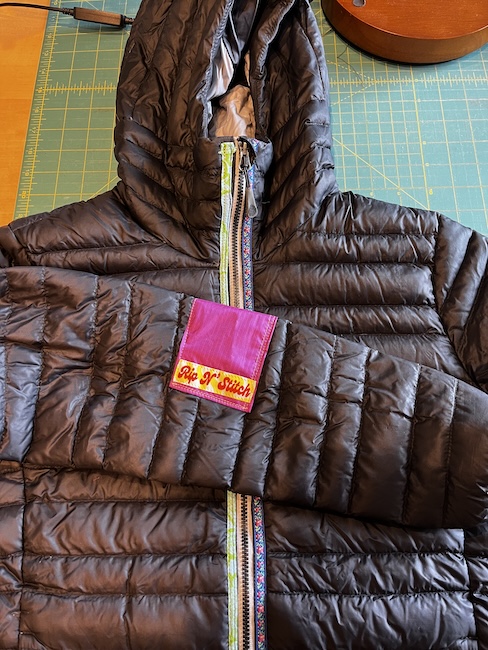
“For some people, it’s economic, practical,” Jacaruso says. “Some people love telling us the stories behind their gear, too.”
She sees it in her own life as well: saving handwritten notes from her mom, or holding onto a pair of river pants that seem to fall apart a little more each trip. “Every time I take them somewhere, they rip in a new spot,” she says. “The plumber’s pipes are never fixed, you know.”
For professional skier Veronica Paulsen, what people keep reflects what the town values. “I think Jackson values our experiences over material things,” she remarks, “and I think it says a lot about what we’re passionate about: nature, and the activities we like to do there.”
She carries a $2 bill in her pocket, “I guess to stack luck in my favor:” a small ritual tucked into a life built around risk and movement. Beyond gear, she points to the things that don’t get replaced so easily: traditions, community touchstones, the feel of a place over time.
For others, what’s kept carries memories more than function. Local artist Anna Douglas Smith still paints with her mother’s brushes, even though she could easily replace them. “I actually enjoy the way that they paint because it’s more of a challenge to figure out how to work with them,” she says.
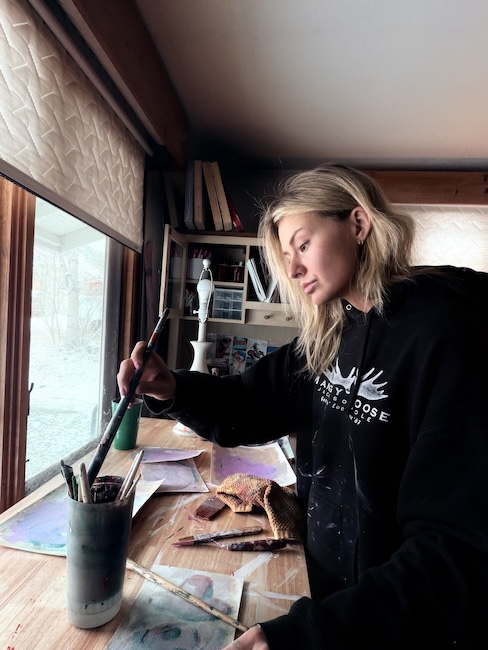
Her connection goes beyond the brushes to her well-worn studio tables, as well. “Every mark is from me and all my hard work along the way.”
Around town, she sees it everywhere: old gear, old restaurants, the ‘old gems’ people return to again and again. Not because they’re better, necessarily, but because they’ve been lived in; something has accumulated and grown there.
Jess Freeze knows her most meaningful piece of gear doesn’t make practical sense. An emergency department nurse and enduro mountain bike racer, she still rides her mother’s old Panasonic road bike around town.
“I would say that’s the piece of gear that is completely non-functional really, but I just love it too much,” she says. “It’s older than me!”
Originally intended for the world’s oldest and longest recreational bike race, the bike has instead carried Freeze on long rides into the Tetons, even over 50 miles. Keeping it requires effort—“I have to special order tubes and parts because they don’t even make them anymore”—but that seems beside the point.
“I think for a lot of people, holding onto things is financially motivated,” she says, “but I think in Jackson it’s also trying to keep things out of landfills and preserve the meaning behind the thing. We live in a pretty environmentally conscious community.”
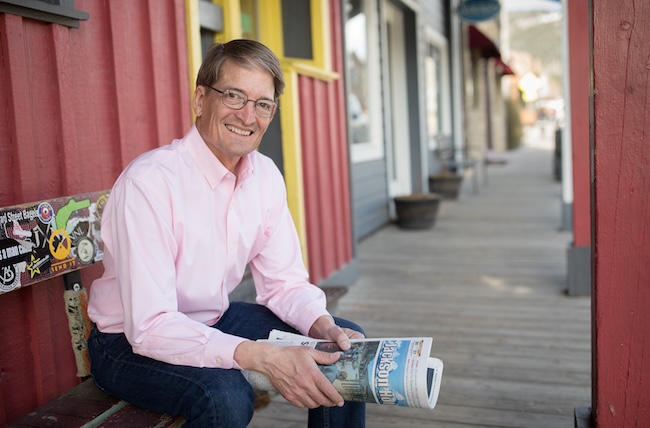
To understand what people keep in Jackson, it helps to zoom out. Mayor Arne Jorgensen sees the question less in terms of gear, and more in terms of people.
“We’ve been making decisions locally for about 100 years around the ethic of conservation,” he says.
People hold onto things for different reasons—“some out of sentimentality, some out of necessity, out of economics”—and those distinctions matter in a place where it’s increasingly difficult just to stay.
“Our strength in this community is because we’re all here together,” Jorgensen says. “We value each other… and that includes all the people that aren’t doing the things we do, or who are just trying to pay the bills.”
Jackson, he says, is both “a community of place and a community of people.”
And that, more than anything, is what needs to be preserved.
The objects—gear, bikes, brushes—are part of it. But they point to something larger. In a town that moves as quickly as this one, what people choose to hold onto becomes a kind of anchor. What we keep reflects a broader commitment to conservation, not just of the landscape, but of the lives built within it.