Born of Flame
09 Jun 2026
Understanding wildfire's power, purpose, and growing presence in the West
Summer/Fall 2026
Written By: Melissa Thomasma | Images: Mark Gocke | National Park Service
This year, the Greater Yellowstone enters summer on dry footing. Snowpack—the region’s quiet buffer against wildfire—came in thin, and summer swept in weeks earlier than usual. Across the West, that signals a familiar reality: fire season isn’t approaching—it’s underway.
But here, fire is not an anomaly. It is an integral part of the landscape’s complex system.
For thousands of years, fire has shaped the forests, grasslands, and wildlife of this region. Indigenous communities across the Northern Rockies used intentional burning to manage the land—clearing undergrowth, supporting food systems, improving habitat, and reducing the risk of larger, more destructive fires.
That relationship shifted as Anglo-American settlement moved west, bringing with it a deep distrust of fire. By the early 20th century—after catastrophic events like The Big Burn in 1910—aggressive fire suppression became the dominant strategy. The goal was simple: put every fire out, as quickly as possible.
For decades, that approach held—but not without mounting consequences.
Without regular, low-intensity fire, forests and grasslands accumulated fuel—dead wood, dense undergrowth, tightly packed stands of trees. By the 1970s, scientists and land managers began to recognize what had been lost: fire wasn’t just a destructive force. It was a critical ecological process.
“Most ecosystems have evolved with fire,” says Dr. Rachel Loehman, a research ecologist with the U.S. Geological Survey. “When it operates in its natural pattern, it increases biodiversity, recycles nutrients, and creates a more resilient landscape.”
Fire, in other words, cultivates change—and that change is essential.
A Landscape in Motion
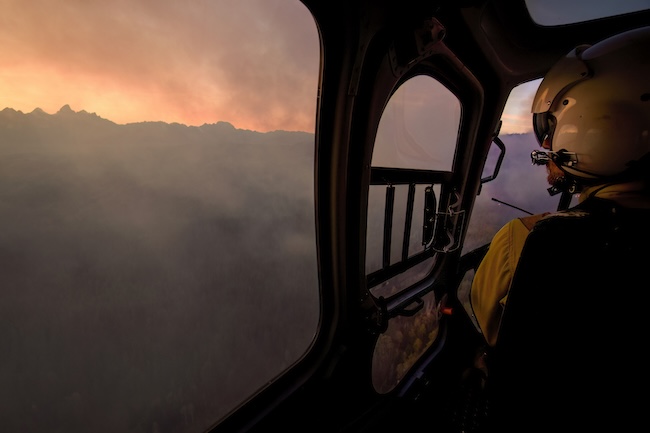
The tension between fire as destruction and fire as renewal has long played out in the Greater Yellowstone Ecosystem. In 1974, when the lightning-ignited Waterfalls Canyon Fire was allowed to burn west of Jackson Lake in Grand Teton National Park, it sparked public backlash. Smoke filled the valley, and many residents saw only loss.
That tension reached a peak during the 1988 Yellowstone fires, when drought and wind drove flames across more than a million acres. Despite a massive firefighting effort, the fires continued until autumn snow finally brought them to an end.
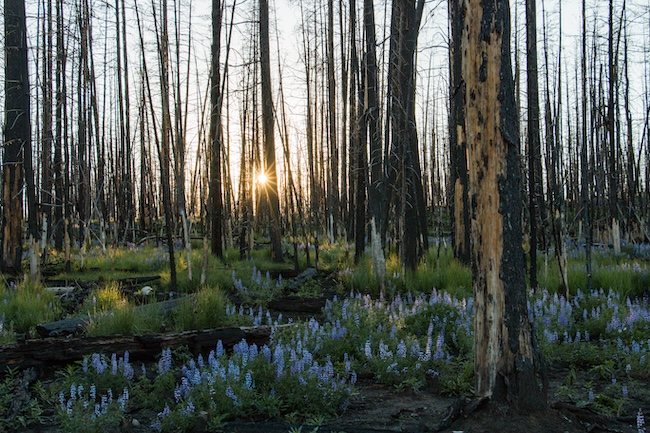
To many, the landscape appeared destroyed. They read blackened trees as markers of tragedy.
But over time, a different story emerged. Forests regenerated. Wildlife returned. The patchwork of burned and unburned areas created new habitat and diversity. What had seemed like devastation revealed itself as transformation.
Still, that understanding can be difficult to hold—especially up close.
“It’s hard to ask someone to appreciate the ecological benefits of fire while their house is burning down,” Loehman says.
Both realities are true. Fire is natural—and it can be deeply destructive.
A Changing Fire
Today, the equation is shifting again.
Fire science often comes down to a simple framework: fuel, topography, and weather. But climate shapes all three. Warmer temperatures, longer droughts, and more extreme weather patterns are changing how fire behaves across the West.
“We’re seeing more volatility in the system,” Loehman explains. “Longer dry periods, more intense wind events, and conditions that allow fires to burn in ways ecosystems aren’t always adapted to.”
In some cases, that means fires that burn hotter, faster, and more extensively than they might have in the past. It also means that strategies built around total suppression become increasingly difficult to sustain.
Under extreme conditions, fire is not easily controlled.
Which brings the conversation back to a more nuanced place: not how to eliminate fire—but how to live with it.
A Fire-Adapted Community
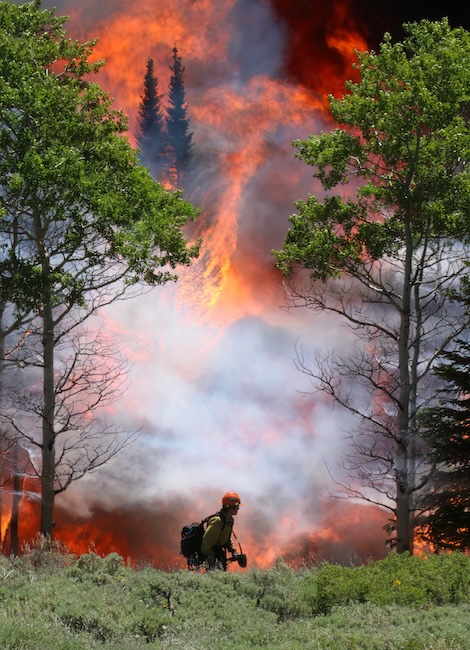
In Teton County, that reality is already shaping how people think about wildfire—especially those working on the front lines of prevention.
“Anything that burns is fuel,” says Bobbi Clauson, Wildfire Mitigation Coordinator with Jackson Hole Fire/EMS and Teton Area Wildfire Protection Coalition. “That includes your home, your deck, your landscaping—everything on your property.”
It’s a shift from the old assumption that risk lives exclusively in the forest. Today, many fires move quickly, carried by wind and embers that can travel miles ahead of the flame front.
Even homes far from dense trees are vulnerable.
One of the most important concepts in modern wildfire mitigation is known as “Zone Zero”—the area within five feet of a structure. Keeping that space clear of flammable materials can dramatically increase a home’s chances of survival.
“If that zone is non-combustible, your home is about twice as likely to withstand a wildfire,” Bobbi says.
The good news is that many of these changes are simple: moving firewood piles away from the house, replacing bark mulch with rock, clearing leaves and debris, and keeping flammable items out of direct contact with structures.
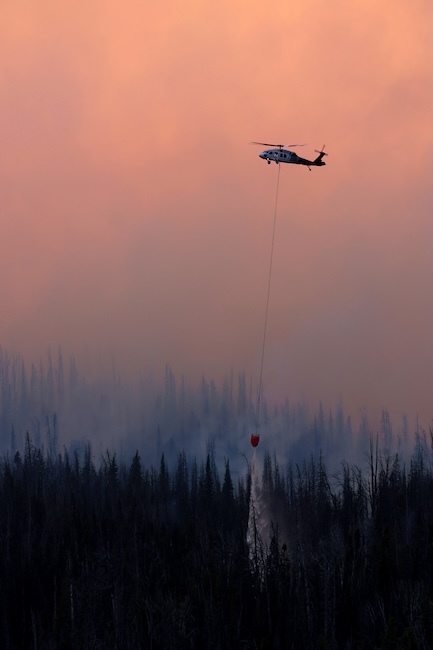
Small actions, taken early, can make a meaningful difference.
Because when a fire does move through a neighborhood, resources are often limited.
Fire crews must make quick decisions about where to focus their efforts—and homes that have already been prepared are more likely to be defendable.
“In order for us to help you, you need to help yourself,” Clauson says.
Responsibility on the Landscape
For visitors, the responsibility looks a little different—but it’s no less important.
Simple precautions—fully extinguishing campfires, avoiding parking in dry grass, and staying alert to changing conditions—can prevent human-caused ignitions. Even something as small as a hot exhaust pipe in tall grass can spark a fire under the right conditions.
Staying informed matters, too. Emergency alert systems, local radio updates, and posted fire restrictions all play a role in keeping people safe as they move through the landscape.
Because wildfire doesn’t recognize the difference between a resident and a visitor.
And in a region where multiple states may be facing the same dry conditions, firefighting resources are often stretched thin. The robust response seen in one fire season is not guaranteed in the next.
Rethinking the Relationship
There is no simple way to think about fire.
It is both a natural force and a growing risk. It sustains ecosystems—and it threatens communities. It reshapes landscapes in ways that are sometimes necessary, and sometimes difficult to accept.
But perhaps the most important shift is this: recognizing that the landscapes we love are not static.
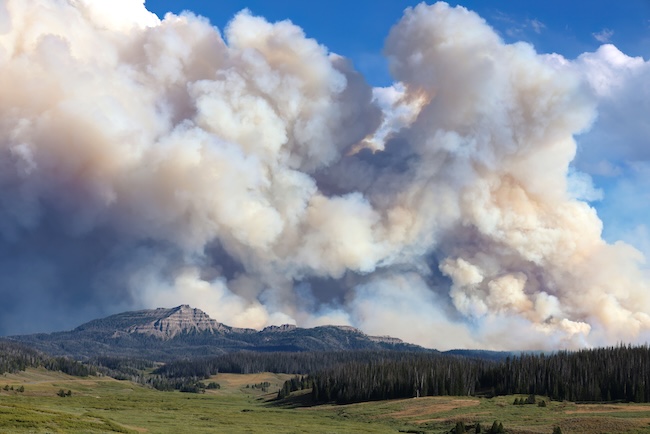
“Just because a part of the landscape looked a certain way when you first saw it doesn’t mean that’s how it’s supposed to be,” Bobbi says.
A blackened forest is not the end of the story. In fact, it’s something of a new beginning. It is an inextricable part of a longer cycle—one that has been unfolding for millennia, and one that continues, even as conditions change.
In the end, living in the West has always meant living with fire.
The question now is not whether it belongs here—but how we choose to live alongside it.