Legend of the One Fly
09 Jun 2026
Anglers, guides, and founders honor the Snake River this September at 40 years of the Jackson Hole One Fly Tournament
Summer/Fall 2026
Written By: Phil Lindeman | Images: Neal Henderson | Jackson Hole One Fly
When Jack Dennis sold his very first fly-fishing lure, Jackson was a one-stoplight cow town in one of the poorest counties of Wyoming. Jackson Hole Resort was barely a year old, but “this wasn’t Aspen,” he remembers, and the occasional wealthy visitor who ventured deep into the Tetons would rarely stay past the summer. A few struggling ranchers and business owners eked out a living on the cold, remote banks of the Snake River, where winters were harsh and the rest of the world seemed miles and miles away.
It was 1967 and Dennis, a founding father of the iconic Jackson Hole One Fly Tournament, knew he had found a home.
“My whole life started in 1967,” says Dennis, now 78 years old and splitting his time between Jackson and grandchildren in other states. At the time he was fresh off a military tour in Vietnam and spending the summer in Jackson, where his family ties ran back to the early 1900s. It was supposed to be a pit-stop en route to playing college baseball in Montana.
That’s when another Jackson fly-fishing legend, Dick Boyer, changed everything.
“Dick Boyer had this rod and reel show, and he said, ‘Can you tie flies?’ I said, ‘Hell yes,’” Dennis remembers. “All I had to my name was a Camaro from selling art in the service.”
Tying flies led to guiding on the Snake, which eventually led Dennis to the burgeoning Federation of Fly Fisherman and a bona fide legend of the sport, Lee Wulff.
“He was the most famous fly fisherman of the time,” Dennis says. “Here I was, rowing a boat for these guys, and that started a friendship with Lee that lasts until today with his wife. She’s 99 years old.”
Wulff’s One Fly
Around the same time, Wulff wrote a magazine article that eventually inspired the tournament, known to most as Jackson One Fly, or simply the One Fly.
“I remember reading that article as a kid and being fascinated,” says John Holland, board president for the Jackson Hole One Fly Foundation. "It all harkens back to that same notion: If you could only fish one fly for a day, what would you fish? You pick one fly and that's what you're in control of. You choose wisely, and you hang on dearly to that one fly."
Dennis and a friend, Jackson guide Paul Bruun, organized the first official One Fly tournament in 1986. It drew plenty of attention thanks to Wulff and his collaborator, Curt Gowdy, a Red Sox baseball TV announcer and longtime host of “The American Sportsman.” Like reality TV mixed with ESPN, Gowdy took celebrities on outdoor excursions, and he immediately saw the appeal of a contest on the river.
The first year of the One Fly was nearly its last. A young guide, Peter Crosby, was chasing after a runaway boat when a riverbank collapsed beneath him. He broke his neck and died. Dennis calls it a “freak accident” and vividly remembers the somber night after, when no one was sure if the tournament should continue. That’s when one of the supporters, Dick Carlsberg, pitched the idea of raising money for Crosby’s two children. The One Fly would continue, they agreed, only now as a fundraiser.
“It started like a burning phoenix,” Dennis says. “It rose and it grew, and it did it because of some really passionate people who said, ‘We are going to make it work.’”
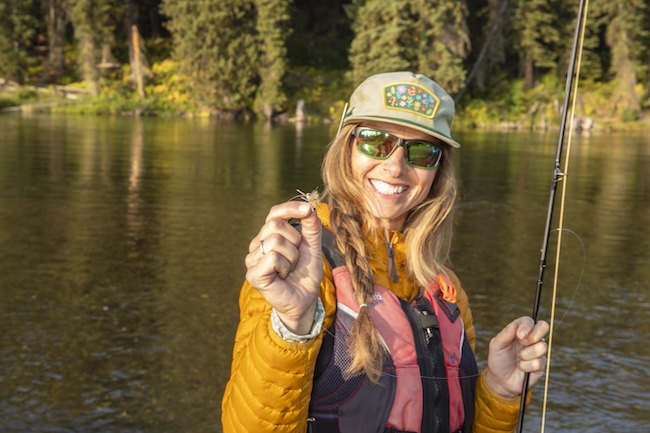
Today, Holland and Sue Bashford, the executive director, lead a team to organize and host the tournament, which celebrates 40 years from Sept. 10-13. The format is simple. Forty teams of four anglers each spend one weekend catching and releasing as many fish as possible using one fly and one fly only. There is strategy. There is friendly competition. There is also a ton of shooting the breeze, which so happens to be the co-founder’s speciality.
“Now I just sit back and watch,” says Dennis, who will not be rowing in this year’s competition, but will proudly tell you he still guides dozens of trips every year. “I watch the creation, watch everyone get crazy, and I get to talk to all the people. I just enjoy being there.”
For The Fish
Holland was a One Fly participant for two decades before joining the board eight years ago. He calls it a “bucket list” tournament for serious anglers, including some of the most famous fishermen to cast a fly–the spirit of “The American Sportsman” runs deep–but the spotlight is not why he does it.
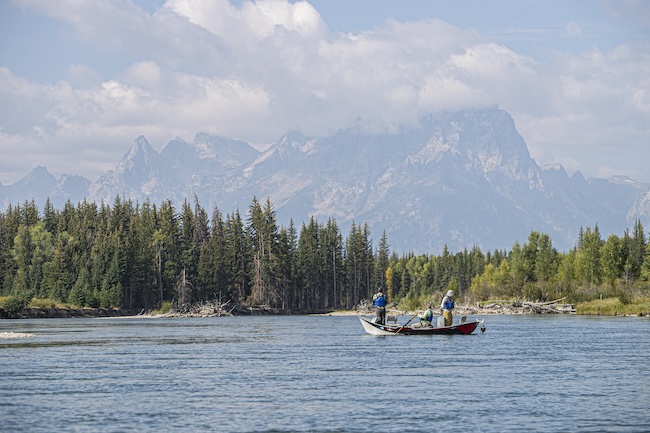
"To think, for the last 40 years a group of likeminded anglers and guides have gathered to support the Upper Snake River watershed and the cutthroat trout,” Holland says. “That's our patron saint. We do that for the goal of giving back to this river we know and love. It's one of the last native cutthroat fisheries on the planet."
Dennis also admits, yes, the tournament has grown thanks to actors, politicians, authors and pro athletes. Many of them he knew personally, even before they hopped in his boat. Dennis grew up playing baseball with Dick Cheney in high school. He taught Harrison Ford how to fish, and read an early draft of Norman Maclean’s “A River Runs Through It.” The star of the 1992 film adaptation, Robert Redford, joined a proto-version of the tournament in 1976, when serious anglers took offense to the idea of fishing for money.
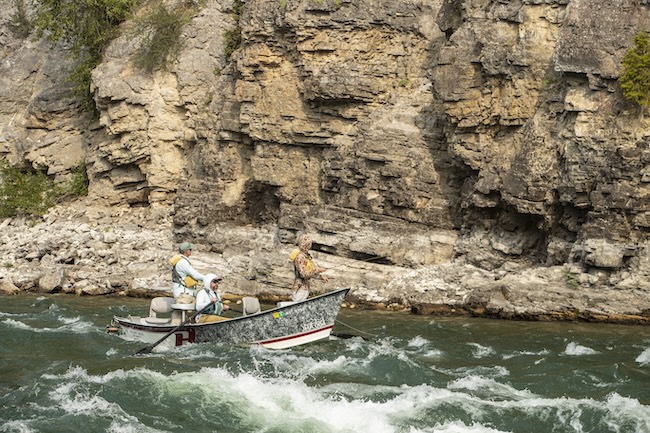
“I was struggling with three kids and a family, but we decided to do a contest. We only had three teams,” Dennis remembers of that ‘76 event with Redford. “We had a lot of resistance. People didn’t think fly fishing should be a contest, and I agree with them, but only if there’s award money. Money breeds corruption. We have some money for the competition, but I look at it as, ‘How can you make fly fishing fair?’ One fly, that’s how.”
For The People
Money might not be its patron saint–that’s the cutthroat trout–but over the years the tournament has raised over $4 million for habitat protection and restoration. When you add matching grant money for projects, Holland says the total is closer to $28 million.
“It does speak to the caliber of our community involved,” Holland says. “That includes everyone from guides and anglers to the administrative staff to the shuttle drivers. They are real conservationists at their core. That, to me, is why it has endured."
For Dennis, the event has endured because it doesn’t forget. Every year one angler takes home the Carlsberg-Crosby Award, named for the man who lost his life at the first One Fly and the man who insisted it raise money to do good. The award goes to the angler who represents “the soul of the event,” Dennis says.
If you are looking for a spot at this year’s One Fly, it’s too late. The tournament sells out almost the minute registration opens, but Dennis and Holland would love to see you on the banks of the Snake in September, cheering on the competitors and seeing how they navigate the tricky confines of a one-fly-fits-all contest.
And if you don’t make it this year? The co-founder and custodian of the One Fly are confident–it’s not going anywhere.
“The tournament is just a vehicle,” Holland says, echoing what Dennis has taught him. “It’s a story of generational conservation. We’re coming upon our third generation of events. We've had 40 great years, and now we’re seeing people who were here as children coming back to compete as adults. We hope they inspire the next.”
The founder’s ‘one fly’
Jack Dennis, co-founder of Jackson Hole One Fly, has a confession: He has fished in his own tournament just once in 40 years. Someone didn’t show up, he says, and “they needed bodies.” (He’d rather row the boat anyway.)
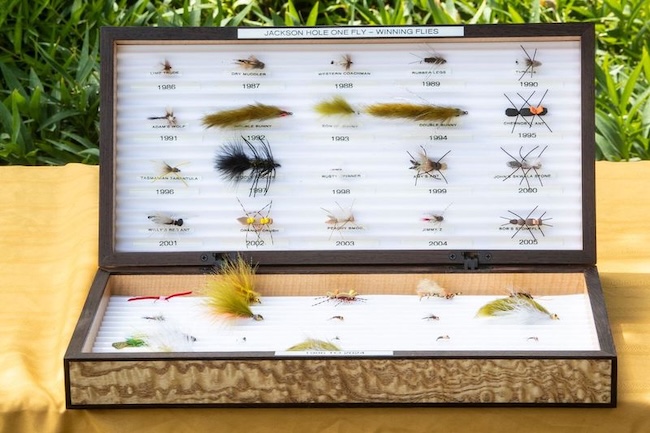
What was his one fly that year? He went with the Mud Minnow, which just so happened to be the same fly picked by Curt Gowdy, host of the classic TV show “The American Sportsman” and a major supporter of the event. The Mud Minnow went on to win the third-ever One Fly.
If Dennis had to pick another fly, he would recommend one of two: the Woolly Bugger or Chernobyl Ant, both of which you can find at local fly shops.
But the right fly is only half the battle. It’s what you do with the fly that matters, Dennis says. He recommends hiring a guide if you are new to the sport, or even just new to the area. They will show you the best patterns for the Snake River and its native cutthroat trout.