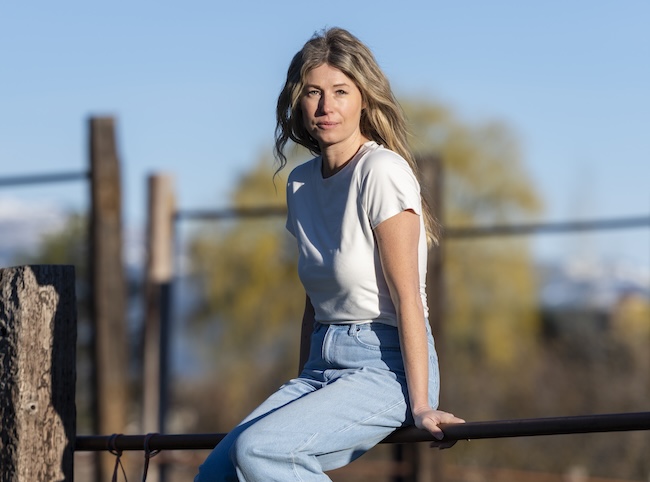
A Voice for the Voiceless
03 Jun 2026
How Rosie Read built a lifeline for Wyoming's immigrants
Summer/Fall 2026
Written By: David Porter | Images: Courtesy Rosie Read
When Rosie Read was a child in Indianapolis she was an animal rights advocate and wanted to be a veterinarian, to “be a voice for the voiceless.” While at Purdue University, she took an international human rights course in college that shifted her interest in advocacy to humans in need. Rosie says she realized then that “I wanted to dedicate my career to helping the less fortunate.”
Rosie is the founder of the Wyoming Immigrant Advocacy Project (WIAP) in Jackson Hole, where she’s been practicing law for nearly seventeen years.
During law school, Rosie interned with the Northwest Immigrants Rights Project (NWIRP) in Seattle. Immigration law is a convoluted practice, one rivaled in complexity only by tax law, Rosie says. Fundamentally, immigration laws in the US govern who is allowed to enter and remain and who is not. A difficulty immigrants are facing in the US is that an immigration attorney shortage has skyrocketed in recent years. Although having an attorney exponentially increases the likelihood of winning a case, only 40% of immigrants in deportation proceedings are represented. Nearly 3.7 million immigration court cases are currently pending, with fewer than 20,000 specialized attorneys available nationwide to handle the overwhelming volume. And the vast majority of those attorneys charge high fees that place their services out of reach for many immigrants.
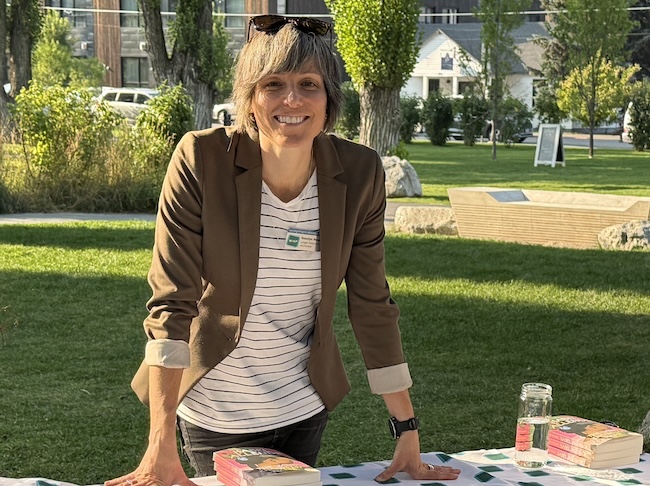
Following her internship at NWIRP, Rosie spent her final semester of law school working with asylum seekers in Johannesburg, South Africa. She returned to the U.S. only briefly before traveling to Nicaragua to immerse herself in Spanish with an eye toward a career in immigration law.
Having first moved to Jackson in 2002 with her mother, Rosie rejoined her family here in 2008 and found employment at a local firm, where she honed her craft as an immigration and criminal defense attorney for nearly a decade. After a two-year respite as a program director at Climb Wyoming, she returned to law as an immigration staff attorney with the ACLU of Wyoming in 2020. While the ACLU's focus was on statewide litigation, Rosie says, “The need for local, affordable, individualized immigration attorney assistance persisted.”
So, she set to work and founded the Wyoming Immigrant Advocacy Project in 2023. Asked why she practices immigration law here, Rosie says, “Teton County, Wyoming, has the greatest income disparity in the US, and there are so many here with immigration legal needs who cannot afford a lawyer.” Jackson Hole has a vibrant culture of philanthropy, and the Advocacy Project is heavily funded by local donors. The organization uses a sliding scale and 60% of clients receive free services. "Immigrants are part of the fabric of this community, and making legal services affordable ensures that fabric isn't torn apart by a system people can rarely navigate alone," says Rosie. Live in Jackson long enough and you realize the town would not function without immigrants.
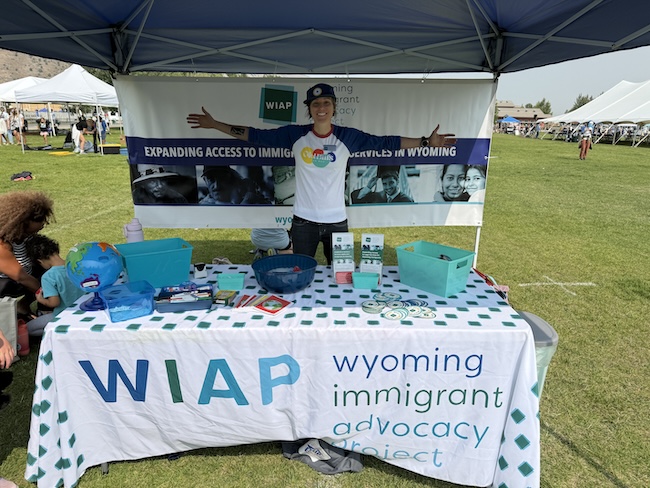
Today, there are fewer than ten immigration lawyers in Wyoming, and there are approximately 23,000 immigrants. Asked about the vision for WIAP, Rosie says her five- to ten-year plan involves expansion around the state.
One might assume that, with such a heavy caseload, Rosie is all work and no play. But there’s more to her story. As a child and even through law school, she avoided public speaking—an irony for someone who now argues cases regularly. After law school, her mother suggested she tackle that fear as a volunteer DJ at community radio station KHOL.
Music had always been part of Rosie’s life. Her father is a professional musician, and she played saxophone and drums growing up, even performing in a high school “screamo” band. She also loved making mixtapes for friends, so hosting a show felt natural. At KHOL she hosted The Lesser Known, a two-hour program featuring under-the-radar tracks. Being heard but not seen, she says, helped her find her voice in the courtroom.
Today Rosie DJs weddings and local events, where, she says, “my goal is to elevate the listener’s experience.” Like her legal work, the role requires careful attention to detail and a focus on the client.
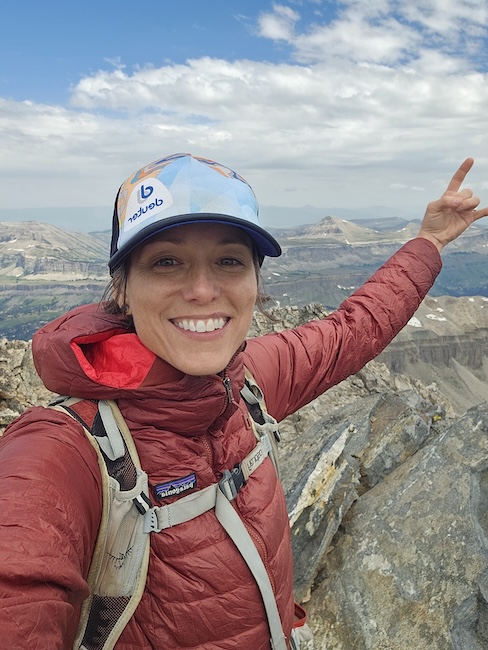
As a parent, lawyer and DJ, Rosie says she feels “compelled to exercise my power and privilege to help those who aren’t as lucky as I am. I’m educated, English-speaking, white, born in the US, cisgendered. I believe those things come with a responsibility to uplift folks who are in a more vulnerable position. Everyone deserves dignity and respect, to live the life they want to live.”
“This is the hardest work I’ve ever done in my life,” reflects Rosie. “But my clients inspire me every day and I feel really lucky to be here. I love this town like it’s part of my family, and I want to make sure that family stays intact.”