The Women Who Shape Wyoming
09 Jun 2026
Lindsay Linton Buk's new book celebrates the lives and leadership of the Equality State's women
Summer/Fall 2026
Written By: Amelia Pane Schaffner | Images: Carrie Patterson
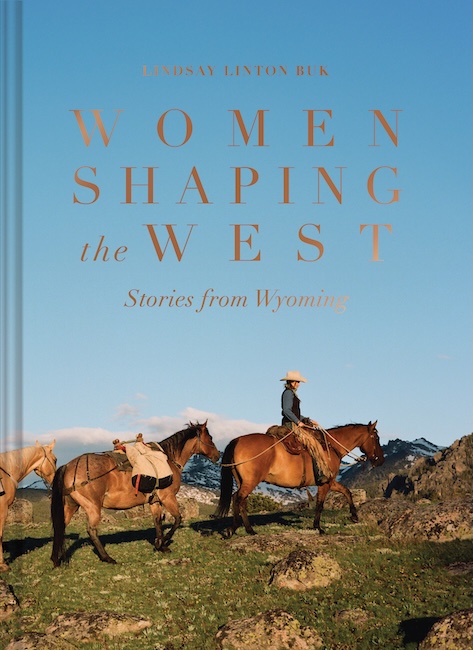
On a ranch in Wyoming, an artist in her eighties paints a canvas nearly thirty feet wide. The scale is astonishing, but so is the persistence behind it. Scenes like this drew photographer and storyteller Lindsay Linton Buk to create “Women Shaping the West: Stories from Wyoming,” her debut book about the women whose lives and work continue to shape Wyoming.
Many readers already know Lindsay through “Women in Wyoming,” the multimedia storytelling project she began more than a decade ago. What started as a photography series expanded into podcast conversations, a traveling exhibition, and now a book that gathers the work into a single volume. The resulting volume is also a striking object, a large-format photography book designed for slow browsing.
Returning Home
For Lindsay, the project began with a homecoming.
Raised in Powell in Wyoming’s Big Horn Basin, she left to pursue photography in New York City before returning to Wyoming in 2013 with a question she wanted to confront: had she been wrong to believe the state was creatively limiting?
“I wanted to connect with women whose passion and purpose were rooted in Wyoming,” she says. “Women who had forged their unique path and stayed true to themselves.”
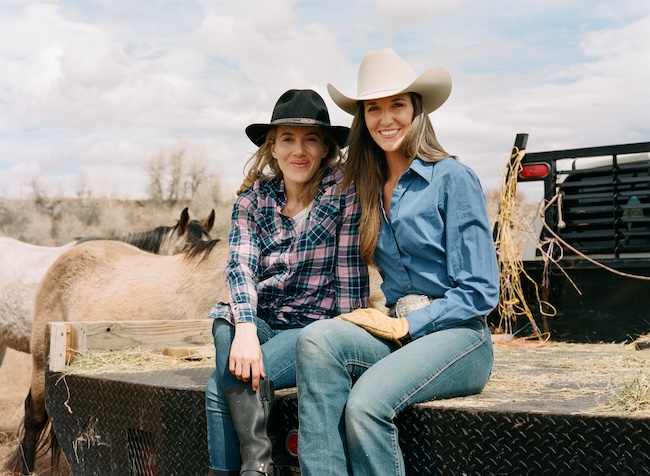
She built the project slowly, five women at a time, while continuing to run her photography business. Each story required travel across the state, long conversations, and environmental portraits made in the places where these women live and work. She photographed them using a medium-format camera, a slower and more deliberate process that reflected the depth of the conversations behind each portrait.
The Wyoming landscape becomes a presence in the photographs. Ranches, mountains, studios, and airstrips are never simply backdrops. They shape the lives unfolding within them, the land emerging as one of the story’s quiet characters.
Women at the Center
Among the earliest women Lindsay photographed was Neltje, an artist in her eighties who continued to paint monumental canvases measuring ten by thirty feet. Encountering that level of creative drive late in life left a deep impression.
“What drives someone to create at that scale in their sage years?” Lindsay wondered.
Questions like that guide the project. Some of its subjects are widely recognized public figures, including Marilyn Kite, Wyoming’s first female Supreme Court justice, who later became the state’s first female chief justice. Others forged influence in rural corners of the state. Lori Materi, for instance, who discovered flying in midlife and went on to help lead the Upton Municipal Airport, advocating for the preservation of rural airfields that connect communities across Wyoming.
Another portrait features Mary A. “Mickey” Thoman, a cowgirl and sheep rancher whose photograph from the project later received international recognition. The book also includes leaders such as Nimi McConigley, the first Indian-American woman elected to a state legislature in the United States, together with her daughter Nina, award-winning author of “Cowboys and East Indians.”
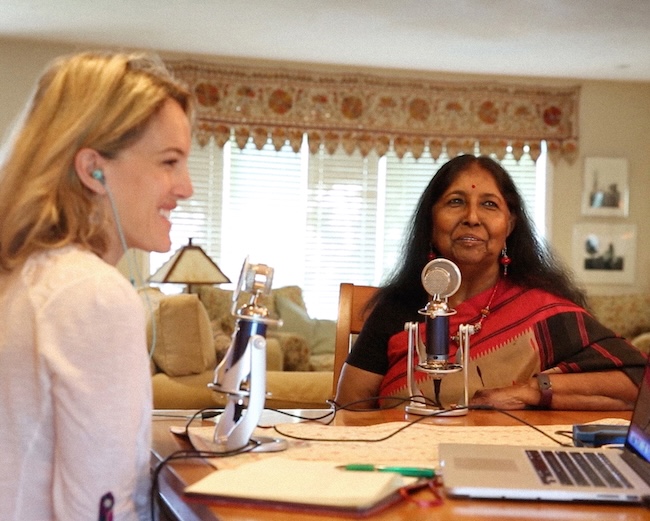
As the project grew, Lindsay began to notice a shared thread among many of the women she photographed.
“I got to step into their worlds,” she says. “Every conversation changed how I thought about what a life can look like.”
Many of the women she met were not pursuing conventional definitions of success. Instead, Buk says, they were following the work that brought them joy.
“These women are leaders in their fields,” she says. “A lot of them are simply following their joy—and watching the ripple effects that come from that.”
A Legacy of Leadership
The book also places these contemporary voices within Wyoming’s remarkable historical legacy. When the territory granted women the right to vote in 1869, it became the first place in the United States to do so. Figures such as Esther Hobart Morris, the nation’s first female justice of the peace, and Nellie Tayloe Ross, the first woman elected governor in the United States, appear alongside modern voices in the book.
The path to publishing the book mirrors the long arc of the work itself. The original exhibition debuted at the Buffalo Bill Center of the West in October 2019.
That same year, Buk entered another transformative chapter of life: motherhood.
Her first son was born just weeks after the exhibit opened, followed by a second child during the pandemic years. The book temporarily paused as family life took center stage.
When she returned to the manuscript years later, the project felt newly meaningful. In many ways, she describes the book as an additional child, something that grew alongside her family and required patience, persistence, and care. She also credits her own mother, a scientist and former teacher from Connecticut, for shaping the curiosity that led her here.
Today, “Shaping the West” stands as both a personal milestone and a cultural record. Through the book, the lives she encountered now exist in photographs and stories that will outlast this moment.
“It’s amazing to watch it keep growing,” Buk says. “The ripple effects just keep expanding.”