The Invitation
03 Jun 2026
Tana Cook blazes a trail for women leading in the outdoors
Summer/Fall 2026
Written By: Caleigh Smith | Images: David Bowers
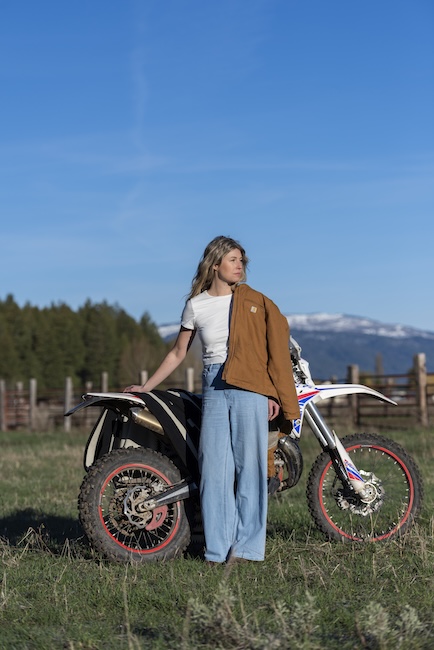
The hillside is quiet for a brief moment, the first of the day. Dirt bikes are turned off, radios are silent, and steady breaths mix with the light breeze. Grateful, hungry eyes take in the rocky scape ahead while tired bodies relax, refuel, and gently buzz with anticipation. Someone shakes the silence loose with a laugh, and the women begin recounting the day.
“Incredible.” “Flowy.” “All-time.”
There’s no performance. No competition. No need to prove anything. There is only the deep understanding that comes from sharing high-stakes experiences with other like-minded humans, especially when those experiences are had in the backcountry.
“Did you know that when individuals are doing physical things together, our bodies actually have a tendency to mirror each other’s physiological patterns?” Tana Cook says later, over coffee. “When you’re going through these shared, hard experiences with people… it’s actually proven that you bond stronger and your physiologic responses begin to mirror each other.”
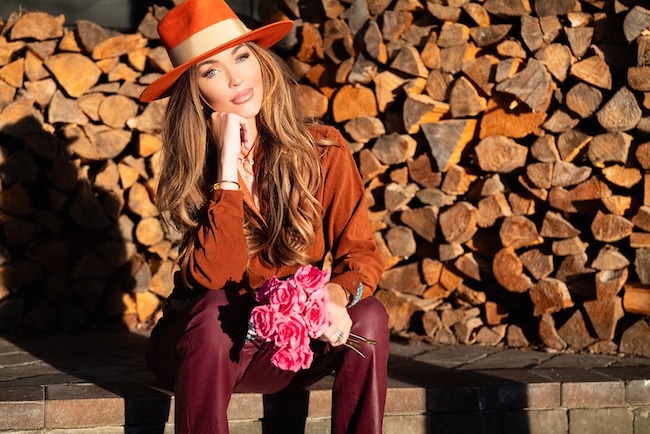
Tana is the founder of Illa, an app designed to connect women in the outdoors.
“They immediately build that trust and connection through the app that I don’t know would have happened if they were just meeting up for coffee.”
At its simplest, Illa was built to solve a practical problem: how to find people to go outside with. Across disciplines (from rock climbing and dirt biking to running and backcountry skiing), the barrier for many wasn’t interest or ability. It was knowing where to look, who to go with, and how to take that first step. The goal of the app was to simply remove the friction. Make it easier to say yes.
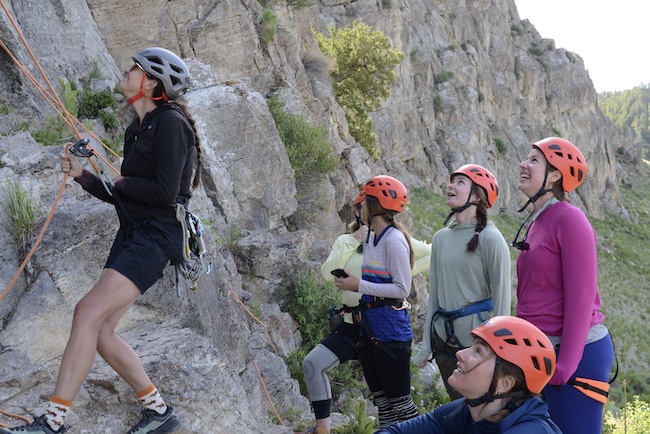
“The hardest part is just knowing where to find people,” says Tana. “We try to be the friend that is inviting you to come along.”
That invitation, she realized, is often the missing piece. The outstretched hand, reaching over the barriers of gear, backcountry knowledge, and intimidation.
And that invitation doesn’t have to be big. It can be as simple as posting a plan, suggesting a route, or starting a group chat. But the act itself is significant.
“Just create the invite,” she says. “It’s such a simple thing, but it’s such a huge step.”
And at first, that was enough.
But as more women began using the platform, Tana started to notice something else. It wasn’t just that people were getting outside together. It was what was happening once they did. She began to see a pattern.
The app and the outdoors weren’t just creating connections, they were changing the way people made decisions, built trust, and stepped into leadership. Hours spent moving together, navigating challenging terrain, managing effort and risk, and making communal decisions with potentially very high consequences, creates a kind of connection that is difficult to replicate elsewhere, she explains.
She has started examining the why and the how of leadership cultivation in the outdoors. What is it about recreating in nature that correlates so strongly with decisive, collaborative leadership? She began to notice that what emerges in these spaces isn’t hierarchy or bravado, but something quieter and more durable: clarity, and a kind of leadership that doesn’t need to be loudly declared to be felt.
In this way, leadership shifts. It becomes less about having the right answer and more about initiating action and taking on the collective decision-making and risk. This reframing is especially clear in the outdoors, she explains, where conditions are often dynamic and decisions have the potential to carry significant weight, up to and including lives.
“By not speaking up in the outdoors, you have excused yourself from what happens,” Tana adds.
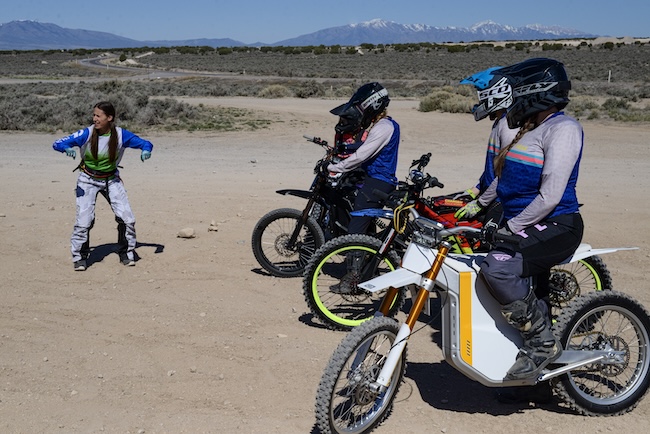
In practice, this looks less like control and more like contribution, she observes.
Many think of leadership and picture ‘leader,’ in the singular. Tana, in her decades of personal and professional observation of women in the outdoors, posits that this type of leadership is instead the willingness to speak up when something feels off, to offer insight when it matters, to poll the group’s opinion, and the willingness to step back when someone else has more experience. It’s an awareness not just of the terrain, but of the people moving through it with you. Great leadership, she explains, moves between people, shaped by experience, awareness, and the specific needs of the moment.
“Leadership is so often assumed to be showing people the way and telling them what to do,” Tana says. “But in stressful, high-risk scenarios, collaborative leadership is the mindset that we should all be inviting up.”
Shared risk accelerates growth, and when the growth itself is based in trust, that kind of connection is difficult to replicate elsewhere.
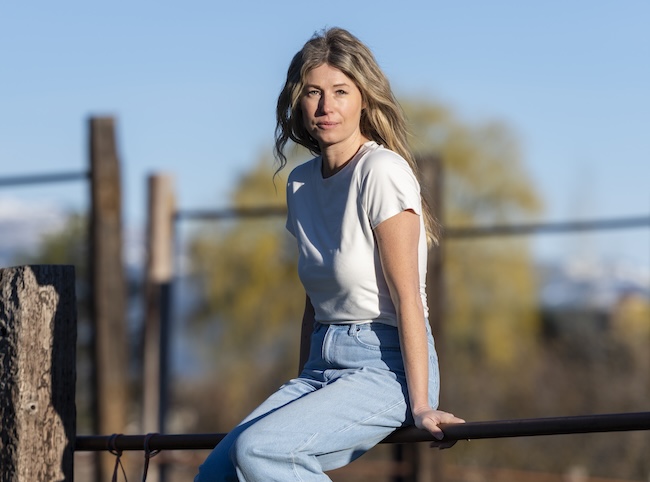
In a place like Jackson, these dynamics are amplified. The landscape itself demands and begs participation, and the people who choose to live here tend to share a certain proclivity for tackling challenges.
“Jackson has a self-selection filter,” Tana says. “Most people make very deliberate choices to be in a place like this.” This creates a community that values depth over surface-level interaction and instills in people the willingness to try, to fail, and to push beyond what’s comfortable.
“There are a million ways to step into leadership,” Tana observes. “It certainly doesn’t mean having to have all the answers.”
Back on the ridge, the group pauses again. The breeze picks up slightly, and layers are adjusted without much discussion. Someone points out another trail option, circumnavigating the layered downed trees.
Another considers it. Nods.
It’s a small exchange, barely noticeable.
But it’s there. In the quiet, in the trust, in the collective movement forward.