Finding Strength in The Saddle
05 Jun 2026
An unwavering belief in potential—built on integrity, grit, and a refusal to accept limits
Summer/Fall 2026
Written By: Mia Fishman | Images: Courtesy Jackson Hole Therapeutic Riding
When Eileen Prugh received her son Crosby’s down syndrome diagnosis, she knew Jackson Hole Therapeutic Riding would be the perfect place for him to learn, grow and feel supported.
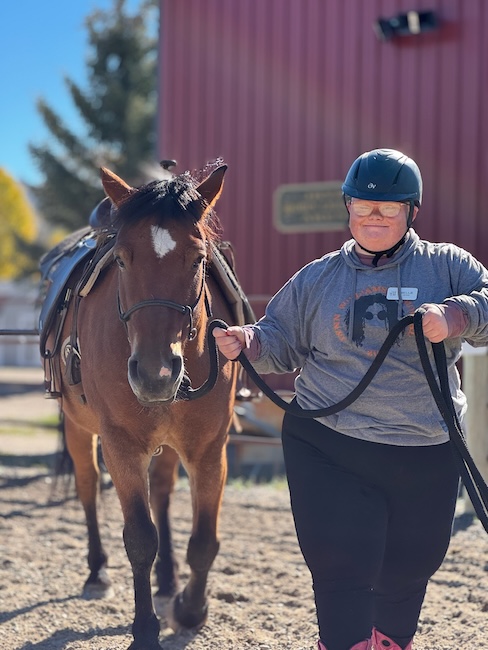
A former JHTR volunteer, Eileen enrolled Crosby “as soon as he could walk independently.” Though initially intimidated by it all, Crosby grew to love riding, due in part to the organization’s devoted team.
“It was a community that not only supported him but our entire family,” Eileen says. “As a parent of a child with special needs, I leave each lesson with a renewed sense of gratitude and belief that my son has a place in this community.”
For the past three decades, JHTR has lent a hand to community members and visitors with disabilities seeking strength, passion and confidence.
Founded in 1993 by Robin Ligtner, Dede McDonald, and Elaine Infanger, JHTR introduced a refreshing mission to the valley: “to empower, inspire, and enrich lives through Equine Assisted Activities and Therapies.”
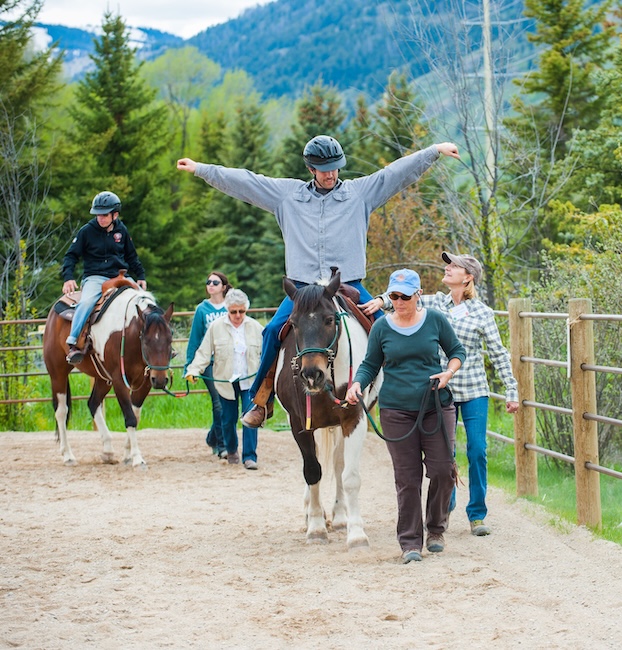
JHTR became Wyoming’s first Professional Association of Therapeutic Horsemanship, International Premier Accredited Center in 1994. Since then, volunteers have been the heartbeat of the organization’s growth, helping with barn work, facility maintenance, horse leading, and rider safety.
“Our volunteers – their support means everything,” JHTR executive director Tori Plennes says. “We couldn't provide the lessons without their day-to-day generosity of their time and love. They're part of the JHTR family in such a deep and profound way.”
More than 250 individuals, ages 3 to 96, participate in JHTR programs each year. Tori, who has worked with JHTR for 12 years, says the organization has evolved significantly.
“When I first started, there was this kind of misconception that we only served children and that you needed to have a referral from a medical professional in order to participate,” Tori says. “Now, people are realizing you don't need to have a referral, but we are also having a lot more people recommend our services.”
JHTR’s 14 horses, equipment and lessons are sponsored by individuals within the community. Nearly 65% of riders receive some level of financial assistance through donations, subsidized fees and the Monica Bell Memorial Scholarship Fund.
“The community has such a direct impact on the work that we're able to do and the people who were able to serve because we're able to offer those scholarships and not turn anyone away,” says JHTR program director and instructor Samantha Melton.
In 2016, Monica Bell, a long time volunteer, suffered a major brain hemorrhage. As part of her recovery process, she became a JHTR rider.
“We were able to give her that opportunity to regain some independence,” Tori says. “She was an avid equestrian, and so to be able to rediscover her strength and independence — even if it was just for a brief moment at the end of her life — was really a special thing to be a part of.”
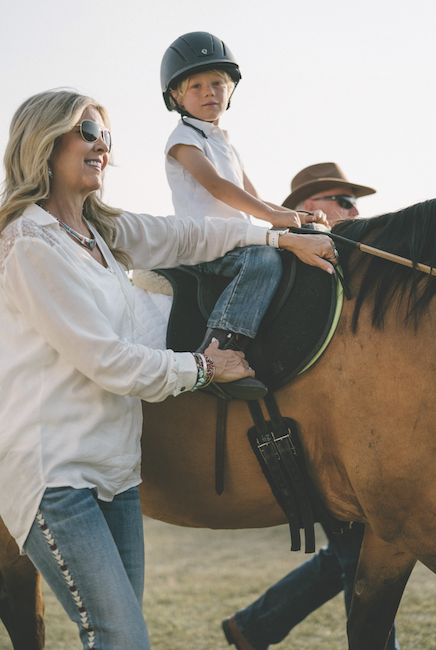
Through its five core programs, JHTR’s certified instructors and volunteers provide safe, interactive experiences tailored to each participant’s needs.
"It's definitely not a one-size-fits-all program,” Tori says. “But I think oftentimes it's just the realization that riders are capable of achieving so much more than they realized.”
The Adaptive Riding program serves a wide range of disabilities and aims to improve balance, muscle strength, flexibility and communication skills.
Equine Assisted Learning focuses on facing challenges appropriately and fostering thought processes while occupational therapy programs emphasize physical and mental health rehabilitation.
Crosby’s lessons incorporated both physical and occupational therapy while strengthening his communication skills, coordination and overall confidence.
“Lessons at the arena taught me that Crosby can do scary things, he can do hard things and that with the right team he can overcome obstacles if we continue to presume competence,” Eileen says.
JHTR also offers programming for military veterans and active-duty service members through its Honoring Our Veterans and Veteran Equine Therapy programs. Soon, local first responders will have programs catered to their needs, too.
For visitors, JHTR created “Making Memories,” an adaptive riding program designed to provide meaningful engagement for those from out of town.
As JHTR continues to expand its programming and reach more participants, its mission remains the same.
“Meaningful, sustainable inclusion starts with access, accommodations and the belief that everyone deserves an opportunity to learn and have fun,” Eileen says. “JHTR’s mission and the people who support it are valuable reminders that goodness and kindness build a community accessible to all.”
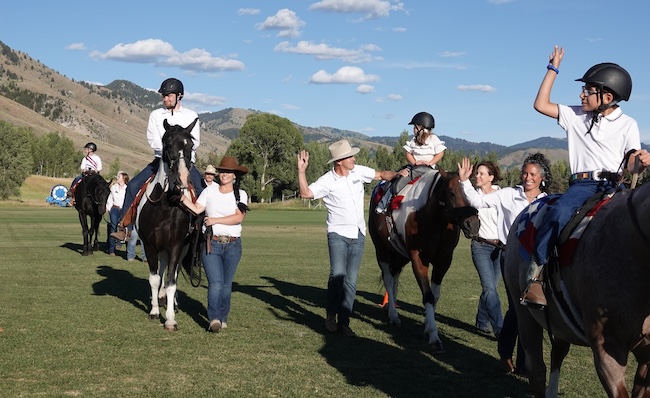
STOMPING THE DIVOTS
Stomping the Divots was born in 2002, beginning as a luncheon but later launching into a formal gala hosted at the Melody Ranch Polo Fields. Since then, it’s been JHTR’s biggest annual fundraiser, netting more than $275,000 annually.
The event blends together a professional polo match, adaptive riding dedications, unforgettable live auction items and local food and beverages.
This year’s event is on August 8th; tickets go on sale at the beginning of June, but sponsorships and donations can be made any time by visiting jhtr.org/donate.