Wild Neighbors
04 Jun 2026
Make your backyard a haven for wildlife—at any size
Summer/Fall 2026
Written By: Lu Snyder | Images: National Park Service | Grand Teton & Yellowstone National Park
Here in Jackson, where the Tetons stand as a daily reminder of wildness, we have a front row seat to the natural world—as well as the impacts of development as it encroaches on our wild places and the creatures for which it is home. We can help minimize that impact by creating wildlife-friendly spaces in our yards and gardens.
The first step?
“For me, it’s all about native plants,” says Kyle Kissock, with Jackson Hole Land Trust. Kyle works with property owners to protect open spaces through conservation easements. “It’s wonderful to see the positive impacts of native plant gardens and plant-based landscaping… on wildlife and pollinators.”
Native and drought-resistant plants will adapt best to our arid landscape.
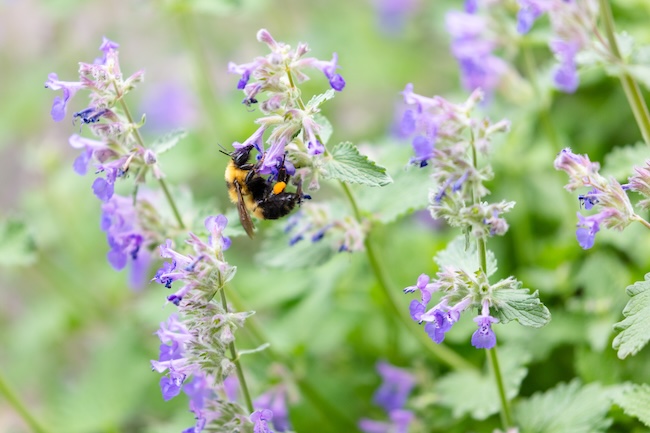
“If you want to attract wildlife, you have to have a good ecosystem,” advises Kelli McAllister, of MD Nursery & Landscaping in Teton Valley, Idaho. “You build a good ecosystem with a diversity of plants.”
Consider a variety of flowers, shrubs and trees. Flowers, like catmint and beebalm, to attract pollinators like hummingbirds and bees, as well as trees and shrubs to provide shade, cover and habitat for birds and small mammals.
A birdbath can provide an essential source of water for birds, insects and small mammals, too–be sure to place it in a shady area, close to trees or shrubs for cover and clean it regularly to prevent the spread of disease.
While it may be tempting to have a clean and manicured yard, Kyle advises leaving some (ideally at least 30 percent of) tree debris, such as fallen branches, pine needles and leaves, to decompose naturally.
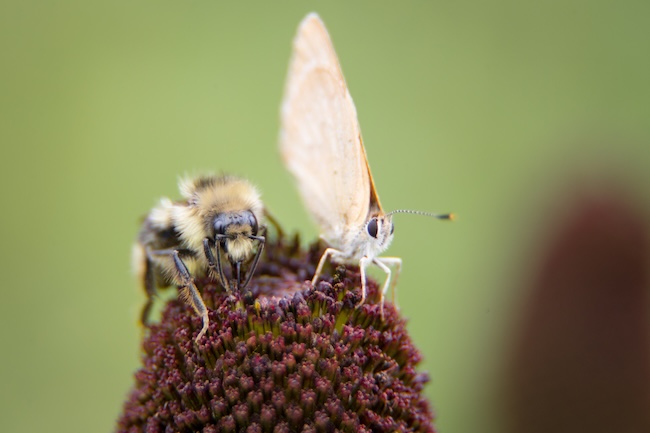
“It’s really, really good for the soil, and it also provides important microhabitat for birds, insects, reptiles, amphibians and even small mammals,” he says.
To live with wildlife means we also need to adapt our habits and home to ensure we are not putting wildlife at risk.
Poisons, for example, can cause unintentional fatalities. That herbicide you use to get rid of the dandelions might also kill that shrub or tree you love. The pesticide you use to control voles can lead to the death of the fox, owl or hawk that feeds on them.
And remember: it’s illegal to feed wildlife, even at home. Local regulations protect wildlife from common attractants, such as birdfeeders (which attract not only birds but also squirrels, bears and deer), garbage cans and even fruit-bearing trees like the crabapple—and it is our responsibility to know and follow those regulations, says Ashleigh Hillary of the Jackson Hole Wildlife Foundation.
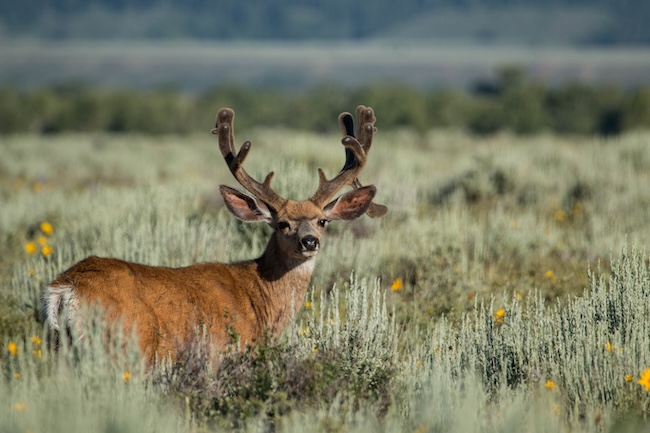
More than one billion birds die each year from collisions with glass buildings, windows and doors, in the U.S. alone, according to the American Bird Conservancy. During the day, glass confuses birds with realistic reflections of foliage and the sky. Many die on impact. You can prevent window strikes with a variety of methods, including window decals and translucent tape. At night, turn off any unnecessary indoor and outdoor lights, which can disorient migratory birds and owls—another cause of deadly window strikes.
“We’re very lucky to live and work where we do,” Kyle says. “It’s up to all of us to be good stewards of our landscape.”
And to care for our wild neighbors, too.